At the Summer School of AI and Cybersecurity held at Khalifa University under the Google.org Grants initiative, our Special Advisor and Principal Investigator Dr. Chan Yeob Yeun delivered a compelling keynote addressing one of the most pressing challenges on the horizon: Agentic-AI Attacks. Speaking to an audience of more than 700 students and professionals, Dr. Yeun outlined how artificial intelligence is poised to fundamentally transform the nature of cyber threats.
Future of Cyberattacks: Agentic-AI Attacks
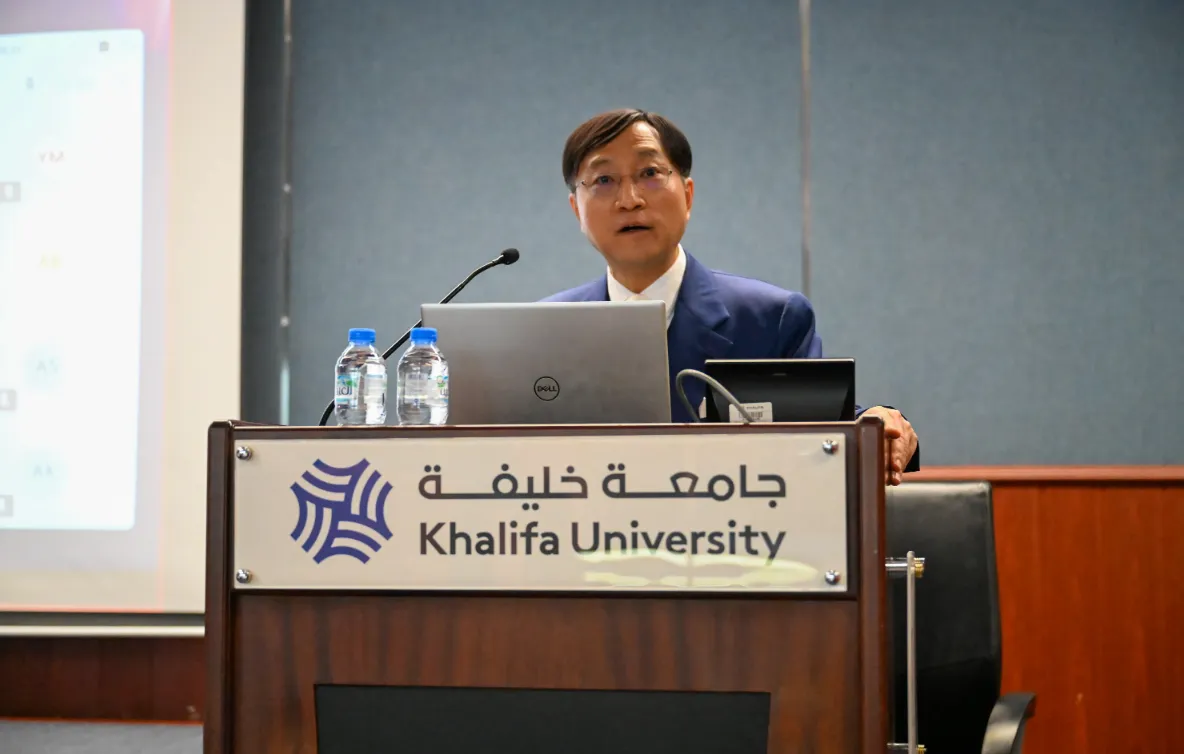
KEYNOTE ADDRESS BY DR. CHAN YEOB YEUN — SUMMER SCHOOL OF AI & CYBERSECURITY, KHALIFA UNIVERSITY
What Is Agentic AI?
Agentic AI refers to artificial intelligence systems that can independently make decisions, plan actions, and pursue goals with limited human guidance — moving far beyond traditional AI tools that simply respond to instructions.
Unlike conventional AI, which requires explicit commands at every step, agentic AI systems can analyze situations, choose strategies, and adapt their behavior based on new information. In the hands of adversaries, this capability represents a paradigm shift in the sophistication and scale of cyberattacks.
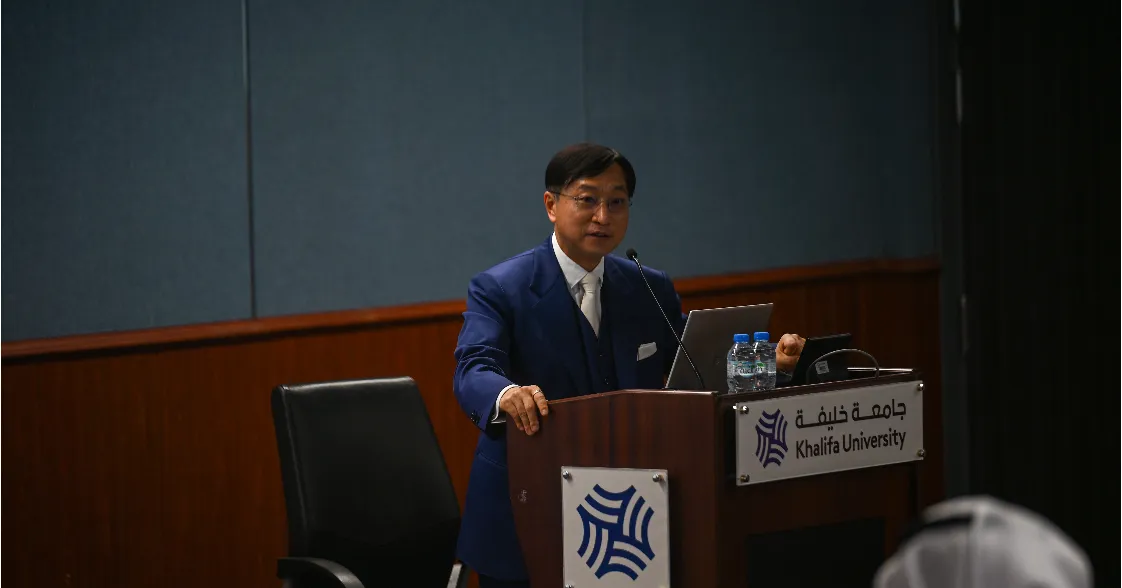
Dr. Yeun engaging with the audience
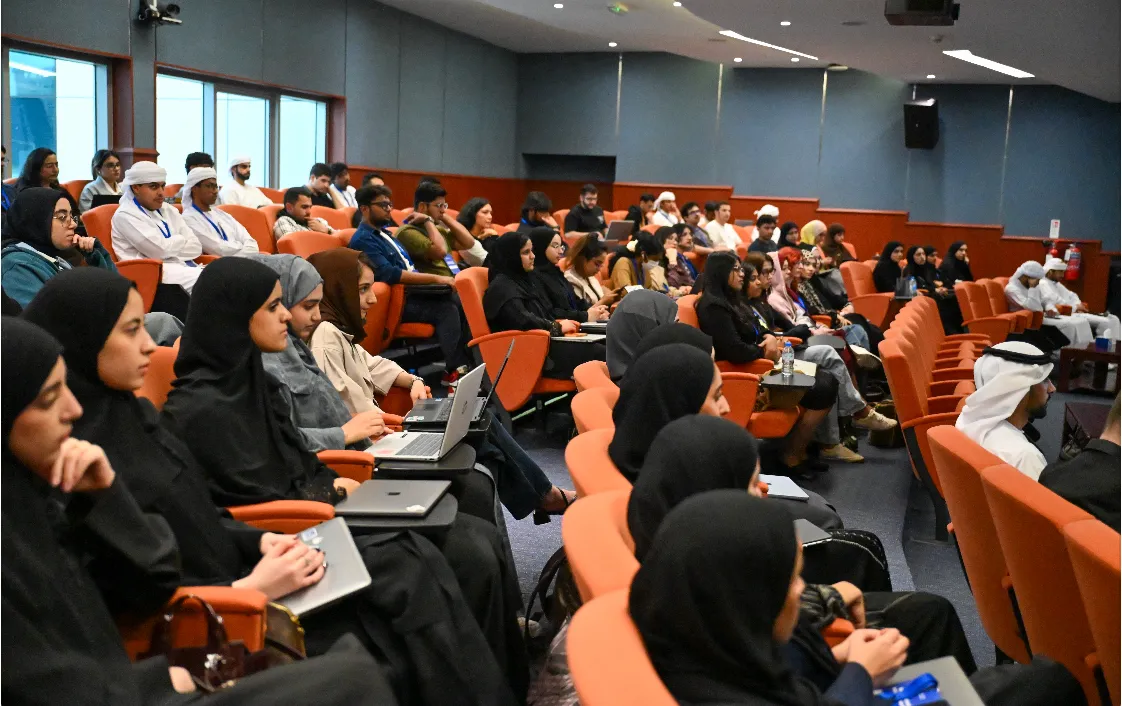
Summer School Attendees
How Agentic AI Reshapes the Threat Landscape
In the context of cybersecurity, an agentic-AI attack is a cyberattack in which AI systems autonomously perform tasks such as reconnaissance, target selection, phishing, vulnerability exploitation, and attack optimization — all with minimal human involvement. This allows attackers to automate complex attack processes and react in real time to changing conditions.
Dr. Yeun highlighted several near-future scenarios that organizations must prepare for:
- AI systems crafting highly convincing, personalized phishing emails tailored to individual targets
- Automated tools identifying security weaknesses faster than any human analyst could
- Attack methods that adjust in real time to evade detection and bypass defenses
- End-to-end attack chains — from reconnaissance to exploitation — executed without direct human control
- Rapid adaptation of tactics based on the responses and countermeasures of the target
As Dr. Yeun illustrated, an agentic AI system could gather intelligence on a target, craft personalized attack messages, test multiple exploitation approaches, and continuously refine its tactics — all autonomously, in a single operation.
Defending Against Agentic-AI Attacks
Dr. Yeun emphasized that defending against this new generation of threats demands an equally intelligent response. Organizations can no longer rely on static, rule-based defenses — they must embrace AI-powered cybersecurity that uses artificial intelligence to detect, respond to, and anticipate threats dynamically.
Key defensive priorities outlined in the keynote include:
- AI-powered threat detection capable of identifying novel, autonomous attack patterns in real time
- Continuous monitoring of networks, endpoints, and user behavior to catch anomalies early
- Stronger identity verification and zero-trust architectures to limit the blast radius of any breach
- Employee awareness training focused on AI-generated phishing and social engineering techniques
- Adaptive security controls that evolve alongside the threat landscape
As AI technology advances, cybersecurity will increasingly become a competition between intelligent AI attackers and intelligent AI defenders. Preparedness and resilience are no longer optional — they are critical.
The keynote served as a timely call to action for the next generation of cybersecurity professionals: the arms race is no longer just between humans, but between algorithms — and those who build the most adaptive, aware, and resilient systems will define the future of digital security.
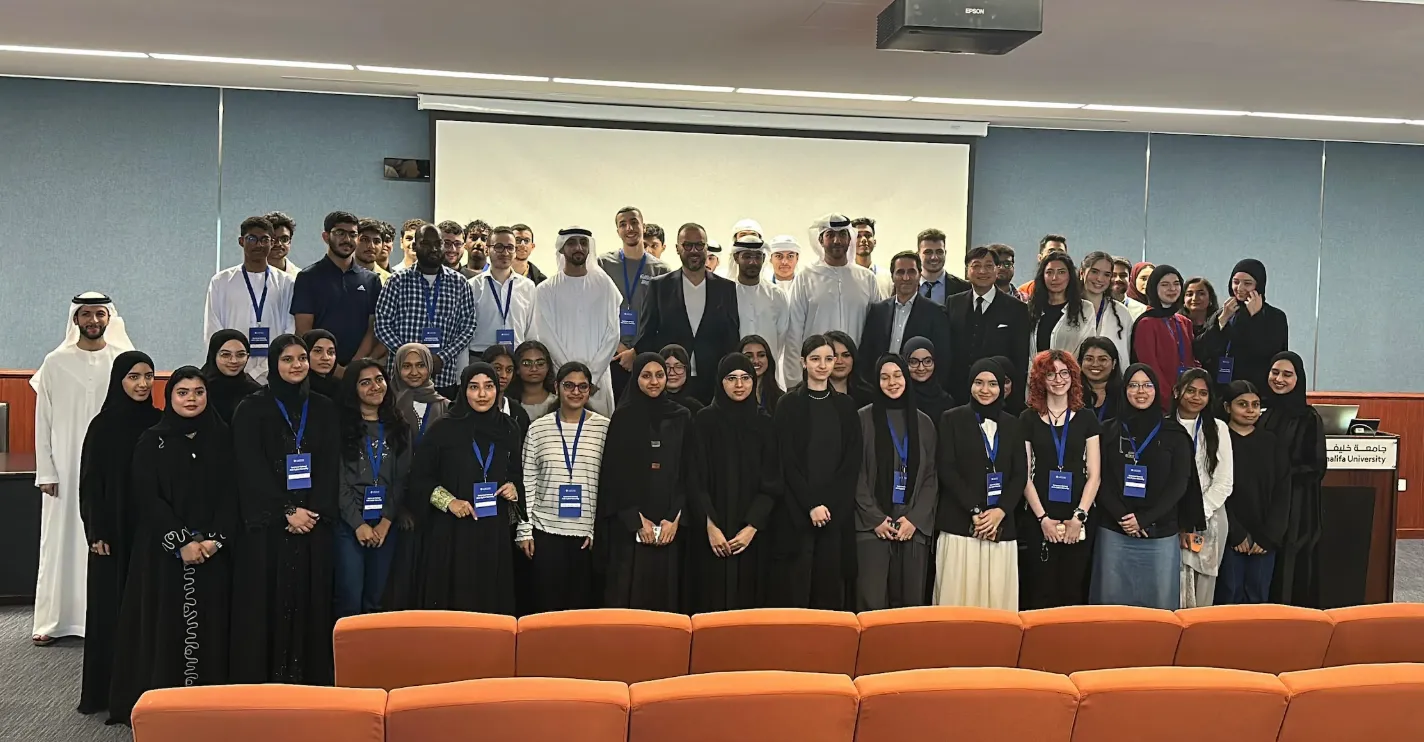
GROUP PHOTO — STUDENTS, FACULTY, AND INDUSTRY PARTNERS AT KHALIFA UNIVERSITY